How to Organise Your Health Information (Without Losing Your Mind)
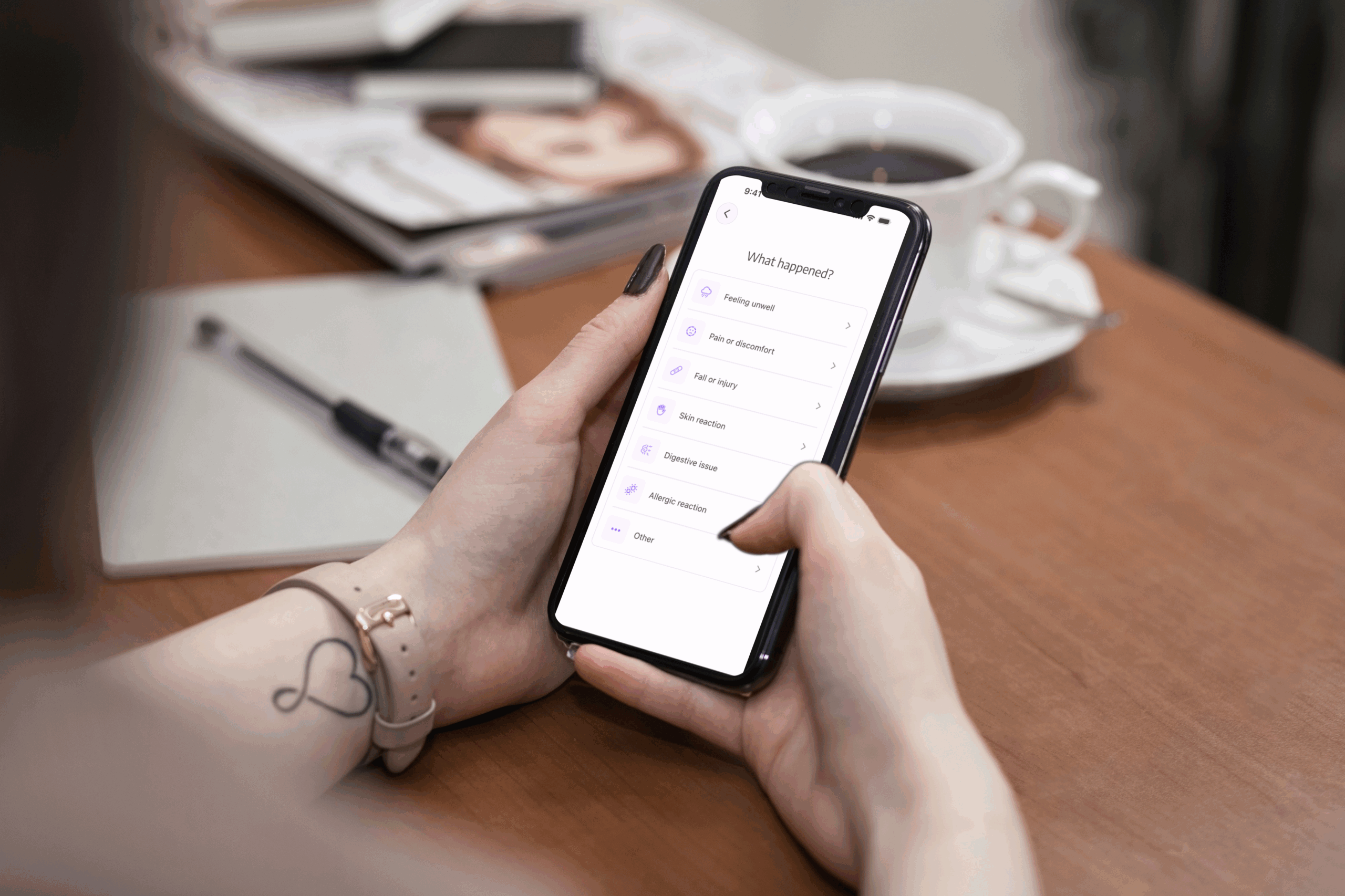
There is a particular kind of overwhelm that comes with managing your health over time. It is not dramatic. It builds silently in the background, in the pile of appointment letters on the kitchen counter, the test results saved in three different email threads, the medication list you wrote down six months ago that is now out of date. If this sounds familiar, you are not alone.
A 2024 NHS study found that resident doctors in the UK spend 73% of their time on non-patient-facing tasks, and only 17.9% on patient-facing activities — roughly four hours of admin for every hour with a patient. PubMed When doctors spend that little time with patients, the burden of information management inevitably falls on the patient themselves.
This guide is not about becoming a health expert or building a perfect filing system. It is about creating just enough structure to feel calm, informed, and in control — so that when you need to find something, it is there, and when you walk into an appointment, you feel prepared rather than flustered.
Why does health information get so scattered?

Most of us do not choose to be disorganised about our health. The system makes it difficult. Information arrives from multiple sources; your GP, a hospital consultant, a physiotherapist, an online patient portal, and rarely in a format that is easy to keep together. Especially if you switch between public and private healthcare, different clinics or consultants or if you see doctors across different countries.
Add to that the reality that health management is often happening during stressful moments: after an appointment where you received a lot of information at once, or in the middle of a flare-up when the last thing you have energy for is admin. The scattering happens naturally. Addressing it is simply a matter of creating a few small habits and a home for your information.
What Health Information Is Worth Keeping?
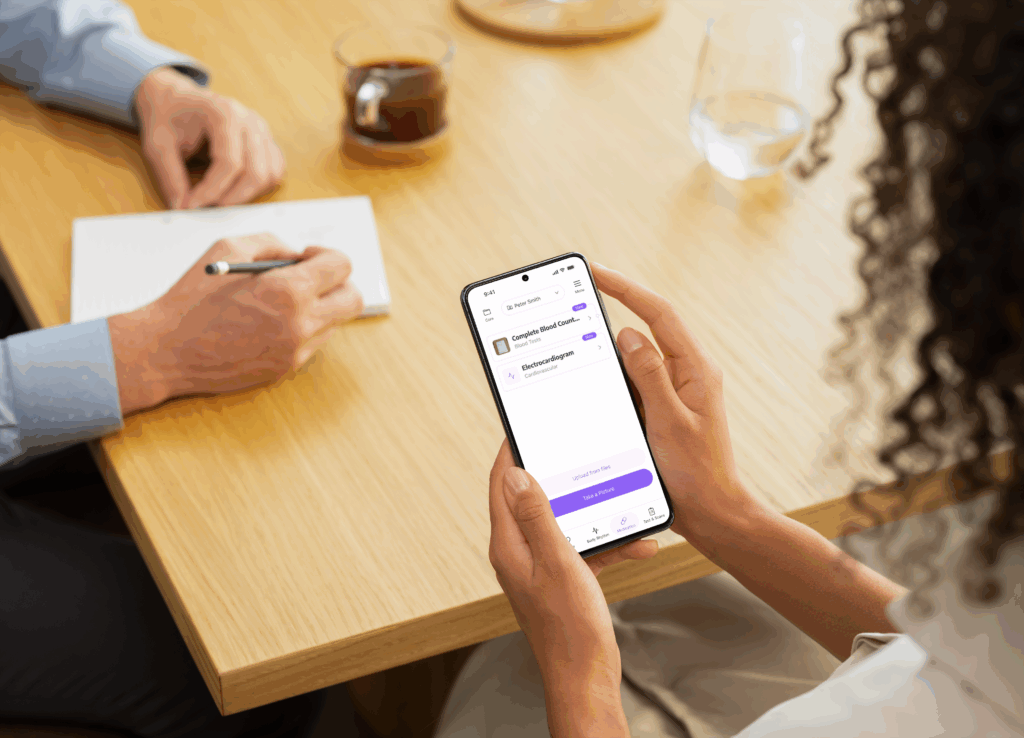
Before thinking about how to organise, it helps to know what actually matters to have on hand. Not every piece of paper needs to be kept forever, but some categories of information are consistently useful to have accessible.
Current Medications
A running list of what you take, the dose, the frequency, and what it is prescribed for. This is one of the most important things to keep updated — and one of the most commonly left out of date. Include any supplements or over-the-counter medications you take regularly, as these can be relevant to your healthcare team.
Test Results and Reports
Blood tests, scans, biopsies, and any other results are worth keeping, even if your doctor has a copy. Having your own record means you can track changes over time, share results with a new provider, or simply understand what your baseline looks like. You do not need to understand every number — keeping the document is enough.
Appointment History and Upcoming Dates
A simple log of who you have seen, when, and what was discussed or recommended. This is particularly useful when you are seeing multiple specialists, when significant time passes between appointments, or when you are trying to remember whether a particular symptom was mentioned to anyone.
Letters From Healthcare Providers
Clinic letters, referral letters, discharge summaries — these often contain important information about your care plan, your history as a provider understands it, and any recommendations made. They are worth keeping in a dedicated place even if they feel like administrative paperwork.
A Symptom or Wellbeing Log
This one is optional but powerful. A simple note of how you feel on a given day — energy levels, sleep quality, any symptoms you noticed, what may have triggered them — can reveal patterns over time that would otherwise be invisible. Many people find this kind of log helps them feel less at the mercy of their condition, and more able to have useful conversations with their healthcare team.
Emergency and Contact Information
Your GP’s name and contact details, your NHS number or equivalent, details of any known allergies, and the contact information for any specialists you see regularly. This is the information that matters most when someone else needs to act on your behalf — a carer, a family member, or an emergency responder.
How to Start Organising?
The temptation when starting any organisational project is to try to do everything at once. This rarely works, and with health information in particular, it can feel emotionally heavy to go through years of documents in one sitting.
A better approach is to start from today and work backwards gradually.
Step 1: Create a Home for Everything
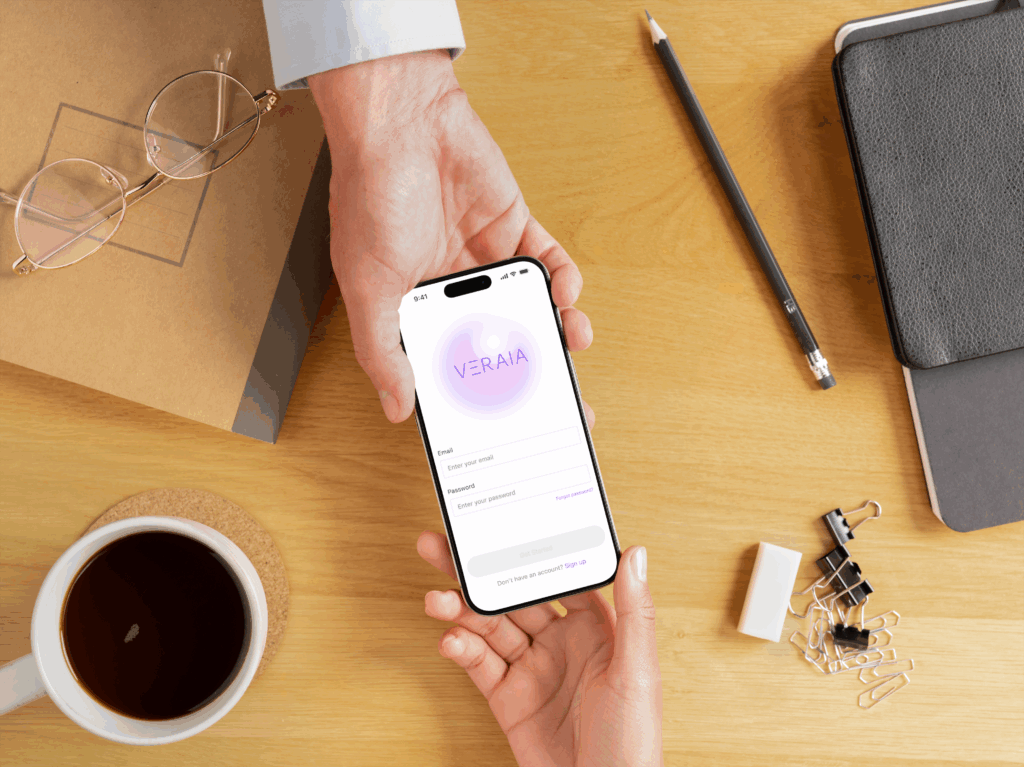
Decide on one place — physical, digital, or both — where health information lives. Of course we would love for you to choose Veraia Life for your digital space. Everything goes in one place.
Step 2: Start With the Essentials
Before tackling the backlog, go through Veraia Life’s onboarding flow which will create a one-page summary of your most important health information: current conditions, current medications, key contacts, and any known allergies or significant history. This single summary screen is immediately useful — at appointments, in emergencies, when seeing a new provider for the first time.
Step 3: Process New Information as It Arrives
The biggest reason health information stays scattered is that there is no habit around new documents. Every time something arrives — a letter, a result, a prescription — it needs a moment of intentional filing. This does not have to be elaborate: a quick photograph into Veraia is enough, the app will do all the filing for you.
Building this habit is worth more than any complicated system, because it keeps the pile from growing.
Step 4: Do a Gradual Backlog Review
Once you have your digital home set up with Veraia and a habit, you can start working through older documents — not all at once, but a little at a time. Some things will be straightforward to add. Others may need a moment to read and understand. Give yourself permission to do this slowly, and to ask a trusted person for help if going through older health documents brings up difficult feelings.
Step 5: Review and Update Regularly
A health record is only as useful as it is current. Veraia will be a simple reminder that will prompt you at time intervals — every month, or after any significant appointment — to check that your medication list is up to date, add any new results or letters, and note anything that has changed.
A Note for Carers
If you are organising health information for someone you care for, the same principles apply — but with an extra layer of complexity. You are managing two sets of health information (theirs and likely your own), often under significant emotional and logistical pressure.
The most important thing you can do is create a separate, clearly labelled space for the person you care for, distinct from your own records. Keep their medication list, appointment history, care plan, and any relevant letters in one place that you can access quickly and share easily with other healthcare providers or family members who may need to step in.
A brief daily or weekly note of how they are doing — appetite, mood, mobility, sleep, any changes you have noticed — is also invaluable. This kind of observation log is often the most useful thing you can bring to a healthcare appointment, because it provides context that a test result alone cannot.
The Difference Between Being Informed and Being Overwhelmed
There is an important distinction worth naming. Organising your health information is not about monitoring every number, chasing every result, or turning your life into a health management project. It is about having enough clarity that health does not take up more mental space than it needs to.
When your information is scattered, the background noise of “where did I put that letter?” or “what did the doctor say about that last time?” or even ‘when was the last time I spoke to the doctor’ is constant. When it has a home, that noise quiets. You are not more informed in a clinical sense but you are calmer, clearer, and more able to engage with your health on your own terms.
That is the goal. Not perfection. Clarity.
Tools That Can Help, and yes of course Veraia
Veraia Life is being created to the be the tool that can help bring clarity, structure and calm to your health records management. Our founder Deyana watched her father’s deteriorating health and her mother’s overwhelm grow over the years. Recently, faced with a number of emergency situations, seeing the breakdown between systems, paperwork and just simple humanity, Veraia was born in Deyana’s mind. She was solving for a complex situation she has been observing for years in her family. Veraia is purpose built health record management tool. It aims to resolve that ongoing overwhelm, feature by feature, screen by screen. It addresses every single point a human being needs in order to manage their health data effectively or to care for someone without the overwhelm of holding space for endless paperwork physically and mentally. And if you are like Deyana’s family who have a playful Siberian cat for a companion who loves chewing on paper, he likes to dig out of drawers you know that extra struggle too.
Frequently Asked Questions
How do I start organising my health information?
Start with what you already have. Gather any physical letters, test results, or appointment notes and scan them with Veraia’s built in camera functionality. From there, follow the simple onboarding journey to create your Core: current medications, known conditions, allergies, your GP’s contact details. Starting small and adding to it over time is far more sustainable.
What health information should I keep track of with Veraia?
The most useful health information to keep track of includes: a list of current medications and dosages, results from blood tests and scans, letters from specialists and GPs, a log of symptoms and when they occur, upcoming and past appointment dates, and contact details for your healthcare team. Do not worry, Veraia’s intuitive design and flow will guide you through adding these important entries in an easy way.
Is it worth keeping a health journal with Veraia?
Yes, and it does not need to be complicated. Veraia’s simple logging flow of how you feel, any symptoms you notice, changes in energy or sleep, and what you ate or did that day becomes your health journal over time. Our AI Observations section will build an understanding of your patterns and will be able to flag anything that does not align with your body rhythm over time and help you recognise patterns. Many people find that having this kind of record makes conversations with their healthcare team more useful, because they can describe what has been happening rather than trying to remember in the moment.
How can I organise health records for a family member I care for?
Create a dedicated ‘Core’ specifically for the person you care for during the onboarding journey. Keep their medication list, history, specialist contact details, and any care plans in one place. It also helps to keep a brief log of day-to-day observations; changes in blood pressure, sugar, or temperature, mood, appetite, sleep, or mobility. If they have bed wounds or rashes you can track those too, which allows you to spot early warning signs of worsening. The summary allows you to easily share with healthcare professionals when needed.