Как всяко семейство може да управлява здравната информация на няколко души едновременно
We have never had more access to health information than we do now. And somehow that doesn’t make taking care of our health easier. Test results arrive by email. Prescriptions are tracked in apps. Portals hold records that would once have sat in a filing cabinet at a GP surgery. In principle, all of it is available.
In practice, it is scattered – and for anyone managing health for more than one person, that becomes even more obvious and overwhelming. You know your child’s vaccination schedule. You know which antibiotic your mom reacted badly to. You know the name of the specialist your partner saw in March.
You are holding multiple health stories in your head. One of them is your own, and it is usually the one that gets the least attention.
If this is familiar, you are not an exception. Almost one third of family caregivers are managing care for an ageing parent while also raising children under 18. The average sandwich caregiver spends 24 hours a week on it – 27 hours for mothers. And 80% say they always or often feel the weight of the mental overload that comes with it.
The problem was never that you weren’t doing enough. It’s that nothing was built to help hold and organise what you’re already carrying. Let’s explore what actually helps in managing the health information of a whole family – starting with why this is harder than it should be.
the three main reasons
Why managing health for several people is different
Managing your own health information is a task, especially if you are trying to stay on top of it or live with a long-term condition. Managing it for three or four people is a different kind of challenge entirely. Because the information doesn’t just multiply, it fragments in different ways that make each individual story harder to make sense of and follow.
Here are three reasons why it can get challenging to manage the health information of a family:
Every person’s history follows a different system– Your child’s records sit with a paediatrician and a school nurse. Your mother’s are split between her GP, a cardiology clinic, and a pharmacy. Your own are scattered between different specialists, emails, apps. Each person exists in a different part of the health system, with different portals, different access rules, and different specialists to communicate with. There is no single login that covers a family.
You are the only one who sees across all of it – Your mother’s GP doesn’t know your father is on the same medication. Your child’s paediatrician doesn’t know there’s a family history that might be relevant. You are the only person who holds the whole picture together. And that picture lives in your head, scattered paperwork, notes and emails. When you’re unavailable — unwell, travelling, simply exhausted — it becomes inaccessible to everyone else too.
The load is invisible, and mostly unacknowledged – Research on sandwich generation caregivers names this directly as mental overload – and it isn’t caused simply by the amount of information. It’s caused by the lack of a consistent place and a system that holds and organises it in a way that makes sense. A repeat prescription due before a bank holiday. A referral pending for six weeks. An appointment, a lab test, an email. None of it is missing. It’s just scattered across too many places to be useful when you need it.
the two essential lists
What you actually need to track for each person
Once you realise that the problem is fragmentation rather than a lack of information or effort, the next question is practical: how to approach it in a consistent way, what actually needs to be held, for each person, so it’s there when it matters the most?
Not every single detail needs recording. For each family member, there’s a core set that covers most situations, and a smaller set that matters urgently in an emergency.
The essentials to track and store for every family member:
Текущи лекарства – names, doses, frequency, and who prescribed them
Allergies and adverse reactions – especially to medication, and what the reaction actually was
Existing conditions – with a rough idea of when they started
Vaccination history – particularly for children, and for older adults
Recent test results – the last twelve months, from any provider
Specialist letters and discharge summaries – the documents explaining why a decision was made
Key contacts – their GP, their main specialist, their pharmacy if relevant
Кръвна група – if known
The four things that matter most in an emergency:
These are the questions paramedics and emergency doctors usually ask first, and the ones most likely to be answered approximately, under pressure, exactly when accuracy matters most. So If you can only hold a few things for each person, always easily accessible and ready – hold these for an emergency situation:
Алергии
Текущи лекарства
Existing conditions
Someone who knows their history and can speak for them.
This becomes even more important for anyone experiencing memory changes. If a parent can no longer reliably answer these questions themselves, you become the only source, and if you’re not in the room, there isn’t one.
what actually works
Three practical approaches
Knowing what to track is only half the problem. The other half is where it lives and how you can use it easily and meaningfully and three simple habits make more difference in time.
One place per person, not one place per topic
The instinct is often to organise by category: all the prescriptions together, all the test results together. It rarely works for families. Organise by person instead. Each family member gets their own space holding everything about them, because that’s how the information is actually needed in practice.
The details you’re sure you’ll remember are often the ones you don’t. After any appointment for anyone in the family, take two minutes to put down: what was discussed, what changed, what happens next. Two minutes at the time is worth an hour of reconstruction later, and that can often happen under pressure, at the next appointment, exactly when it matters most.
Make it accessible to someone other than you
This is the step almost everyone skips, and it’s the most important one. If you were unreachable tomorrow, could your partner answer a paramedic’s questions about your child? Could a sibling tell your mother’s doctor what she currently takes? A system that exists only in your head is a single point of failure for several people’s health at once.
One note here: managing an adult’s health information should always be done with their knowledge, and wherever possible, their involvement. For a parent who is fully capable, this is a shared task rather than something done for them.
the one place to keep everything together
Къде Veraia fits
So the structural issue was never effort. It is that the records are scattered by design. Every clinician holds their part. Every institution holds its part. Nobody holds the thread that runs across years and across people. What you have been doing – managing a household’s worth of overlapping health information – the one job no single part of the system was set up to do.
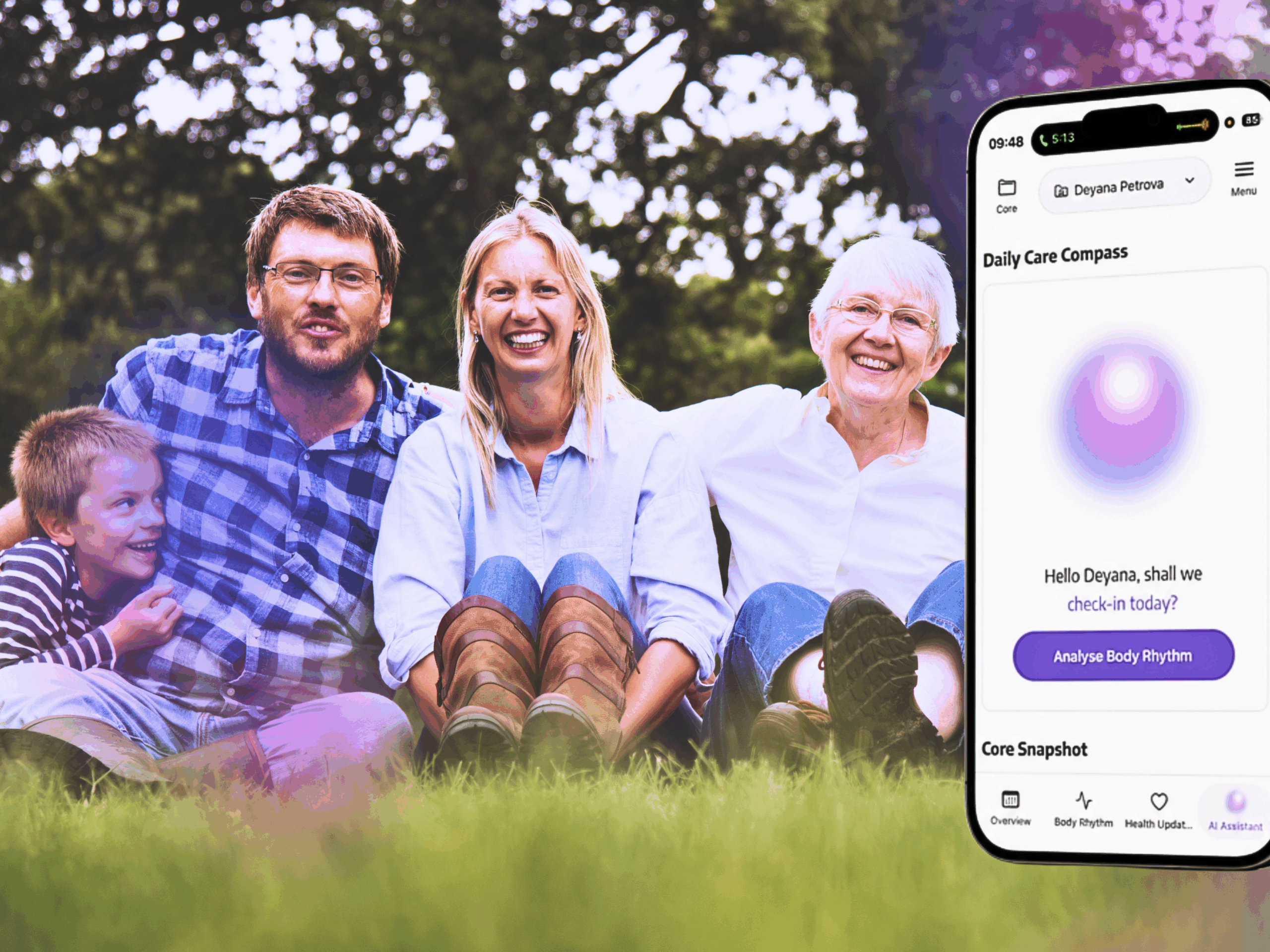
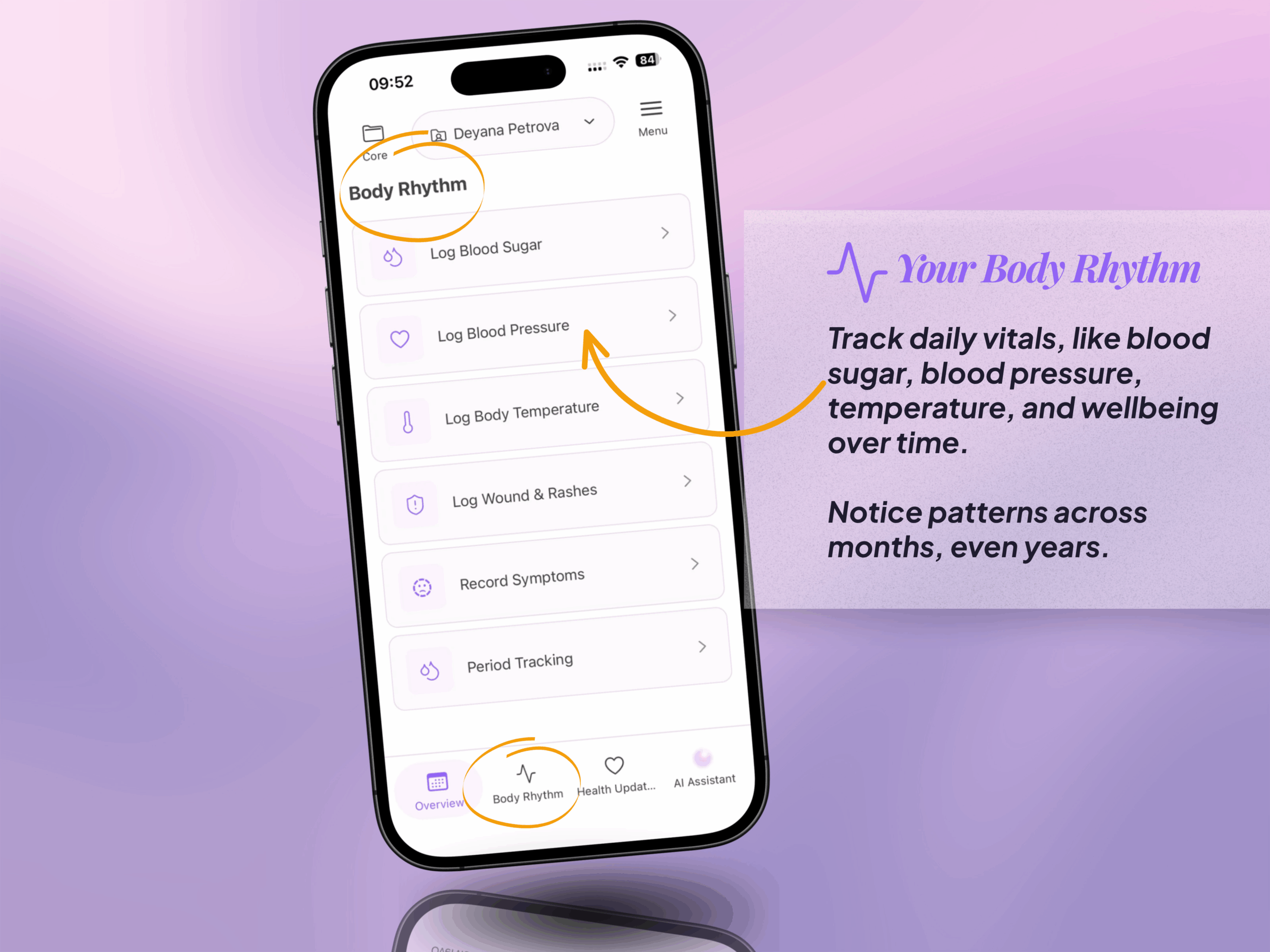
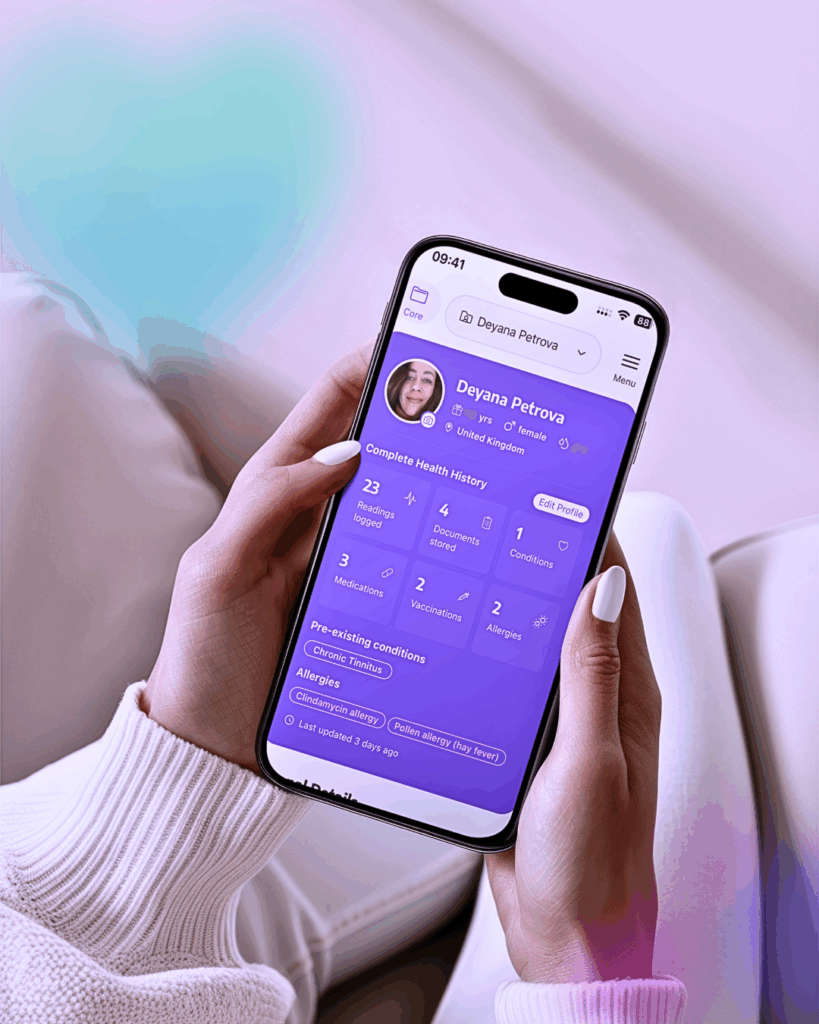
Veraia lets you create a Core for every family member – a child, a parent, a partner, yourself – each one holding that person’s conditions, medications, allergies, vaccinations, test results, specialist letters and documents, in a single chronological timeline. Your mother’s specialist letters live in her Core. Your son’s asthma plan lives in his. Nothing is ever mixed together, or buried inside your own record, but stored in one consistent place over time. The Body Rhythm is where day-to-day symptoms for each person individually are logged, and Veraia Observations surface what’s worth noticing in their story over time specifically, not blended in with anyone else’s.
Veraia doesn’t diagnose, and it doesn’t replace a doctor. It’s simply the place that holds what you’re already holding – just not only inside your own head anymore.
if this feels like a lot
A starting point
Everything above is a lot to take in at once, and none of it needs building in a single sitting.
Start with whoever’s health is most active right now – the person with the most appointments, the most medications, or the most recent change – and begin there. Four facts are enough: medications, allergies, conditions, and their GP’s details. That’s fifteen minutes, and it covers what any doctor will ask in most situations.
Add to it after each appointment rather than trying to catch up all at once. Six months of small additions builds something complete and meaningful. The goal isn’t a perfect record. It’s a record that’s better than memory, accessible to more than one person, and always there when it matters.
За да Ви осигурим най-доброто преживяване, използваме технологии като „бисквитки“ за съхранение и/или достъп до информация за устройството. Даването на съгласие за използването на тези технологии ще ни позволи да обработваме данни като поведение при сърфиране или уникални идентификатори на този сайт. Отказът да дадете съгласие или оттеглянето на съгласието може да повлияе неблагоприятно на някои характеристики и функции.
Функционален
Винаги активен
Техническото съхранение или достъпът са строго необходими за легитимната цел да се осигури използването на конкретна услуга, изрично поискана от абоната или потребителя, или с единствената цел да се осъществи предаването на съобщение по електронна съобщителна мрежа.
Предпочитания
Техническото съхранение или достъп е необходимо за легитимната цел за съхраняване на предпочитания, които не са поискани от абоната или потребителя.
Статистика
Техническото съхранение или достъп, които се използват изключително за статистически цели.Техническото съхранение или достъп, които се използват изключително за анонимни статистически цели. Без съдебна заповед, доброволно съдействие от страна на вашия доставчик на интернет услуги или допълнителни данни от трета страна, информацията, съхранена или извлечена единствено за тази цел, обикновено не може да бъде използвана за вашата идентификация.
Маркетинг
Техническото съхранение или достъпът са необходими за създаване на потребителски профили с цел изпращане на реклами или за проследяване на потребителя в рамките на един уебсайт или в няколко уебсайта за сходни маркетингови цели.