Veraia, Whoop и Oura: две различни функции, а не конкуренция
If you wear a WHOOP or an Пръстен Oura – or you’re deep in the process of deciding between them – you’re someone already investing in your own long-term health and wellbeing. And you already understand something most people don’t think about: your body produces a huge amount of physiological signals every single day, and it’s valuable to track them. Overnight HRV. Recovery. Strain. Sleep architecture. Both devices do this brilliantly, in different ways, for different kinds of users.
But having that information accessible isn’t enough, on its own, to use it in a meaningful way. What’s missing isn’t more data – it’s somewhere all of it can live alongside the rest of your health story, so a pattern in your recovery means something next to a medication, an appointment, or a result from six months ago. This isn’t a comparison of WHOOP against Oura against Veraia. It’s about the layer that sits underneath all information and turns it into a coherent story.
and are great at
What WHOOP and Oura are each built to do
WHOOP is a training load and recovery system. Its screen-free band exists to answer one question clearly: how recovered are you, and how much strain can your body handle today? The daily Recovery score is built from overnight HRV, resting heart rate, respiratory rate and sleep performance, and it’s tightly integrated with a Strain score that reflects your accumulated cardiovascular load across the day.
For anyone training seriously – lifting, endurance sport, structured programmes – WHOOP’s strain-to-recovery loop is very useful.
Oura is a sleep and readiness-focused wearable, worn as a ring rather than a wrist band, and generally regarded as the more discreet and comfortable of the two for continuous overnight wear. It tracks sleep stages, sleep latency, efficiency and restfulness in real depth, and its overnight temperature tracking is particularly good at surfacing early physiological changes – a rising temperature after a long flight, or in the days before catching an illness, often shows up in the data before it shows up as a symptom.
Peer-reviewed comparisons against clinical-grade equipment (ECG, polysomnography) have found Oura’s HRV and sleep accuracy among the strongest of any consumer wearable.
and why it matters
Why accessible data isn't the same as a connected story
Both devices are excellent at making your physiological data accessible. Open the app, and there’s your recovery score, your sleep depth, your HRV trend for the week. That’s a valuable insight into the way your own body recovers and reacts. But it is even more valuable if you use it intentionally in context.
Accessible data isn’t the same as connected data. Your recovery score sits in one place. The fact that you started a new medication this week sits in a text message to yourself, or nowhere at all. A dip in your sleep score sits in the app. The specialist appointment from last month that might explain it is somewhere in your inbox. The information is there and it’s plenty. It’s just sitting in separate places, with no thread to connect it.
That gap matters more than it first appears, because almost nothing about your health means much in isolation. A single data point – a recovery score of 62%, a night of poor sleep – is a fact. It only becomes truly useful once it is a part of something bigger: how you felt yesterday, the medications you’re taking, the test results from two months ago. Your health works as one connected system. Your information should too.
where a wearable signal means more
The layer underneath
Take a readiness score on WHOOP that’s been low for the past two weeks. On its own, it’s a number worth noting, but doesn’t mean much. Next to a lab test result, it’s a thread worth following. Patterns only become visible when the different data points can connect with each other over time.
Neither WHOOP nor Oura can make that connection, because the second half of it – the medication, the appointment, the diagnosis – was never something either app was designed to hold. This isn’t a shortcoming unique to either device. It’s true of every wearable on the market. They are built to observe your body. They were never built to be the place where your health story, as a whole, actually lives.
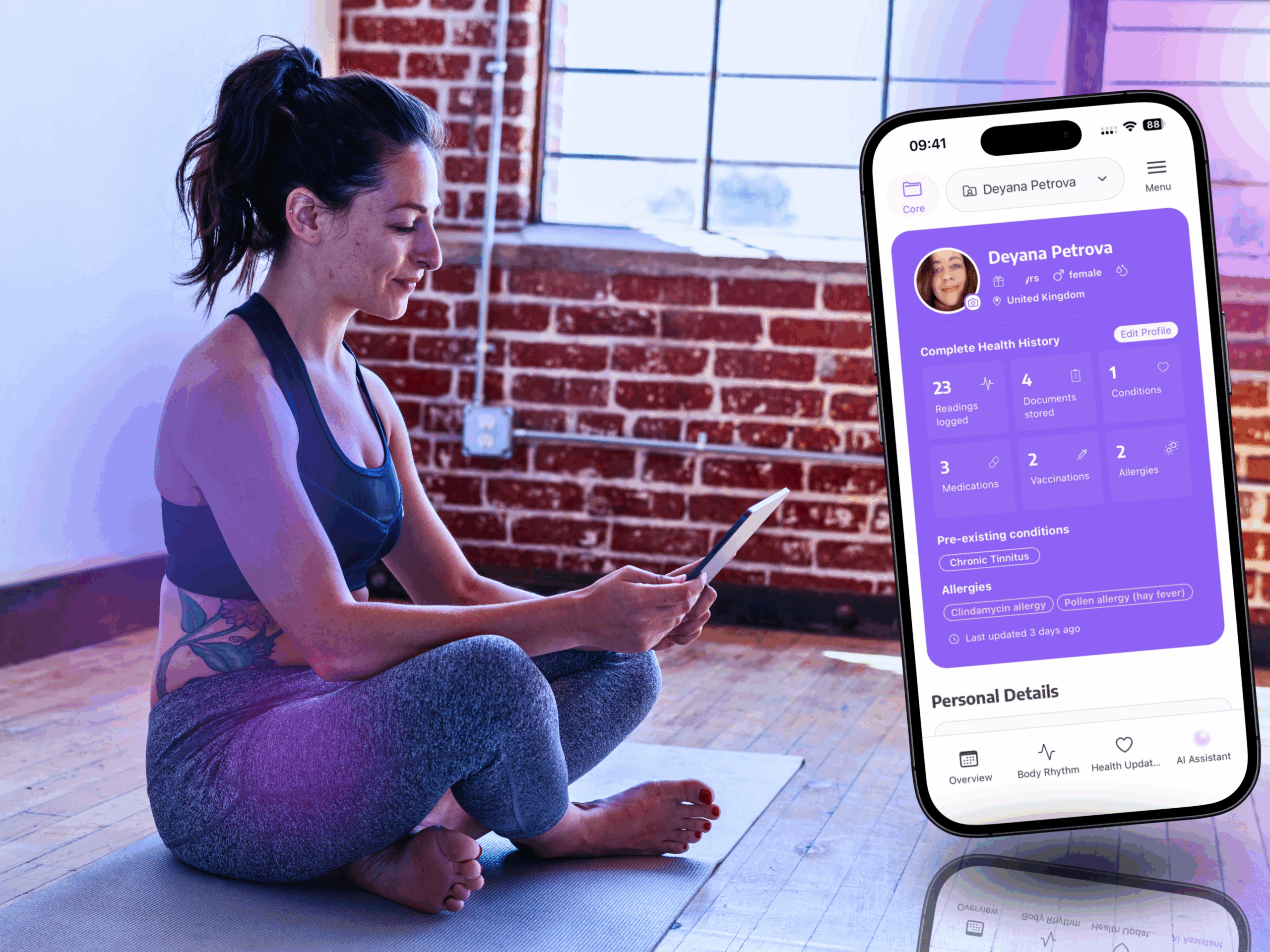
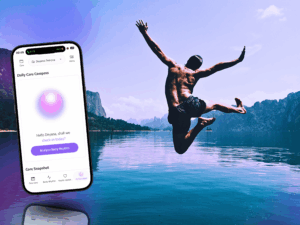
This is where Veraia comes to bridge the gap. It’s a персонален AI здравен асистент. – not a wearable device, and not a competitor to WHOOP or Oura. It’s the layer that sits underneath both: Вашето Ядро on Veraia is the single place where your conditions, medications, allergies, vaccinations, test results, specialist letters and documents live together, in one chronological timeline.
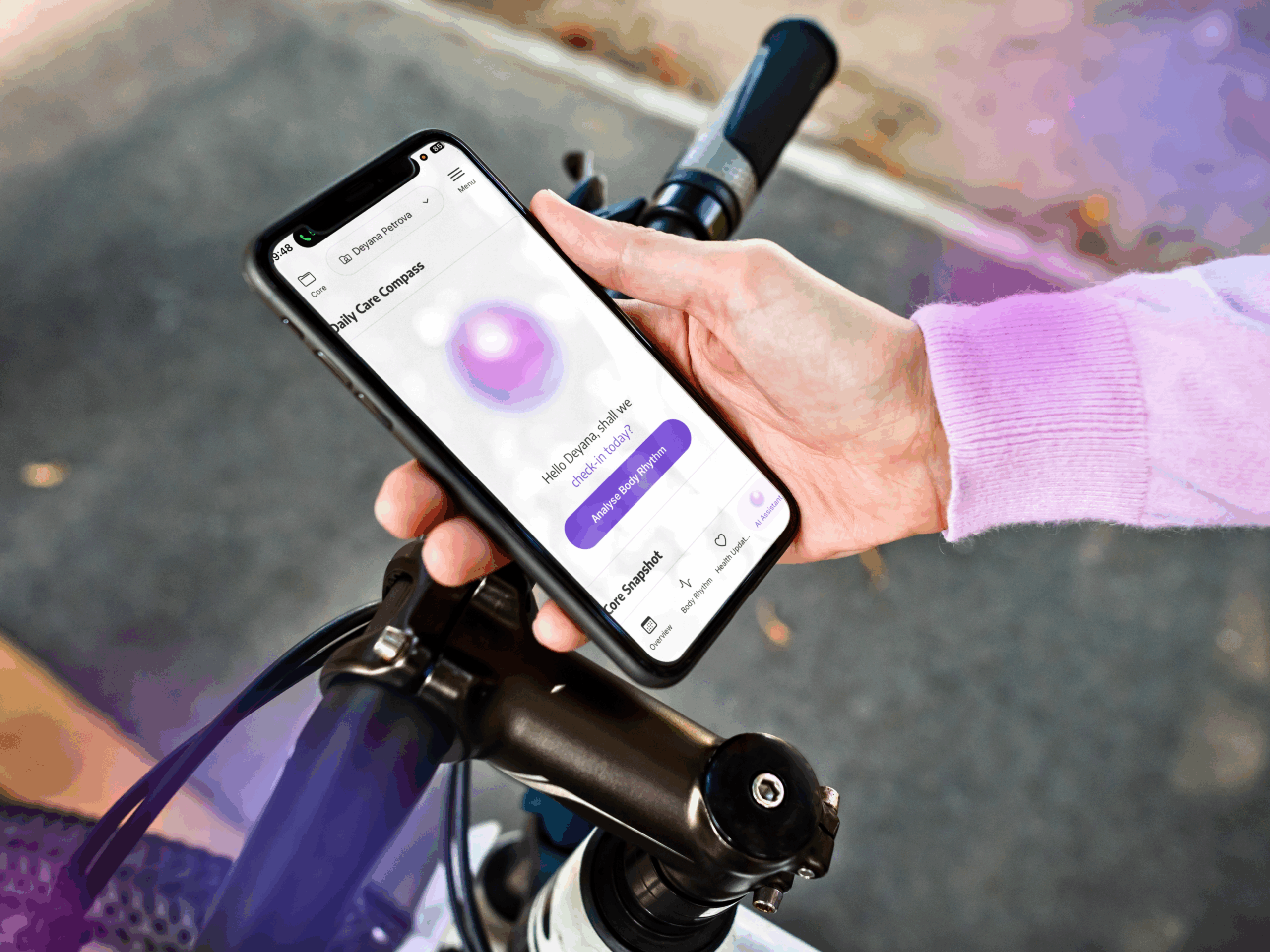
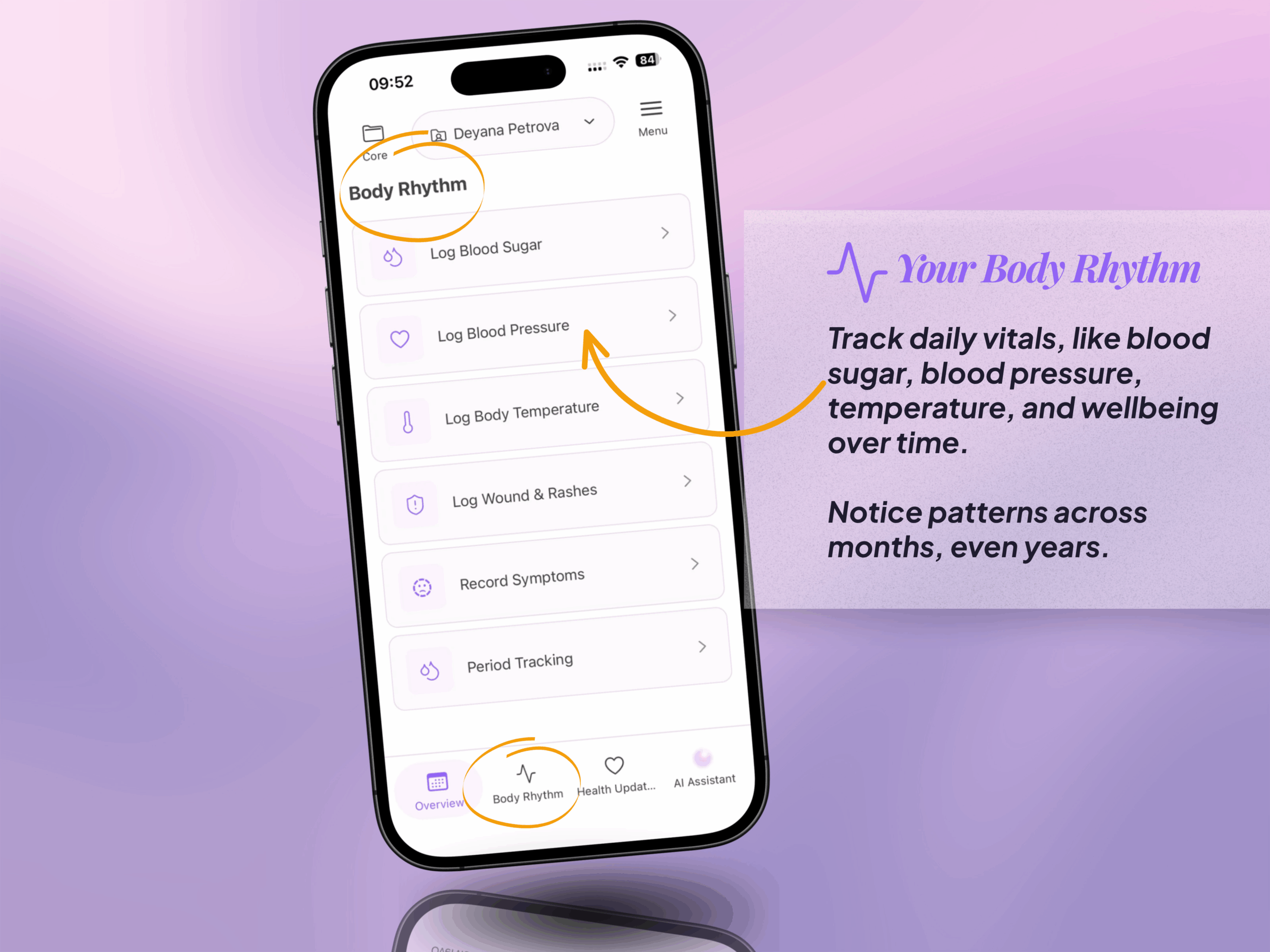
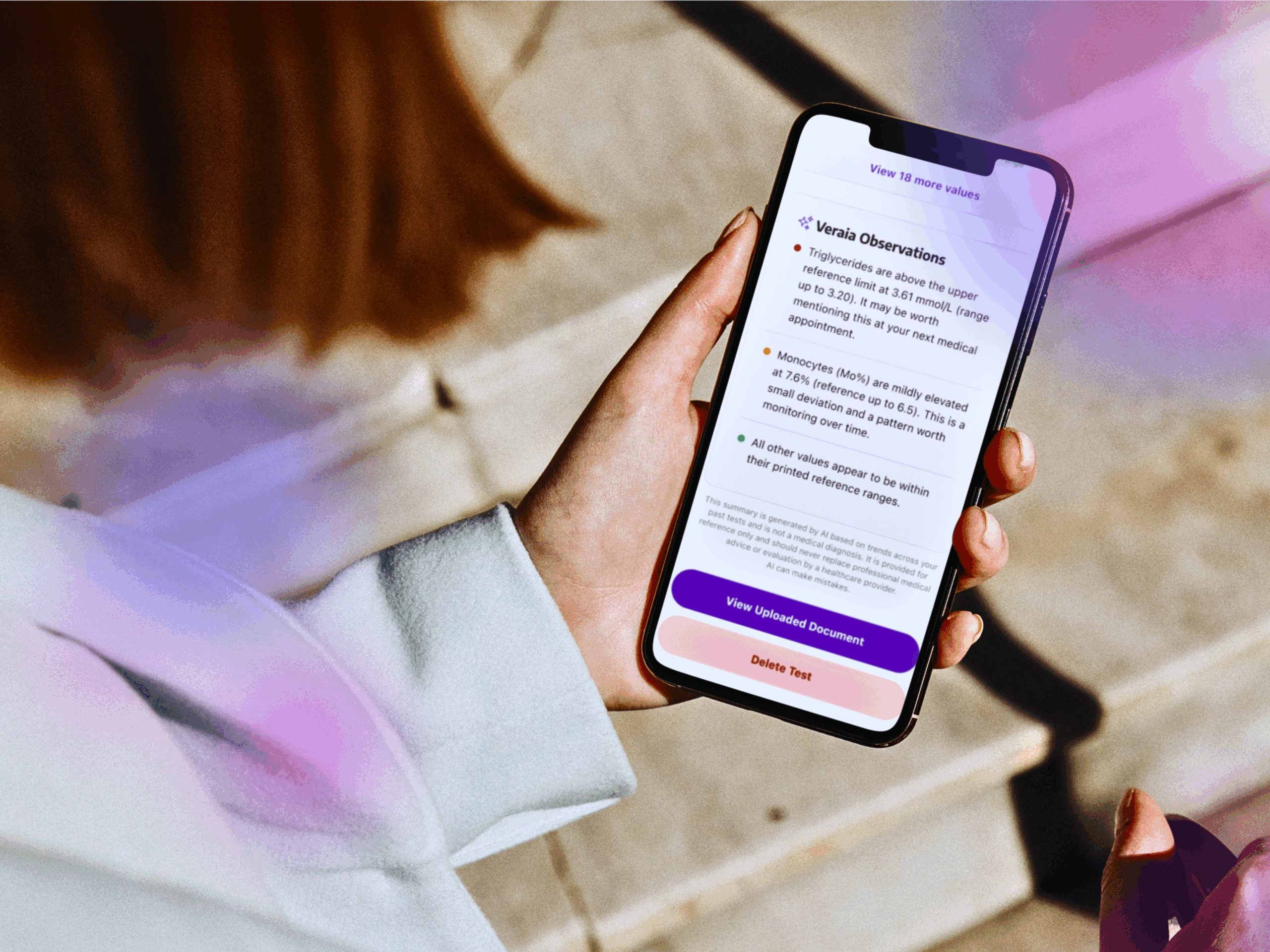
Вашият Ритъм is where you log daily vitals, symptoms and general wellbeing – sitting in that same timeline as your medical history, not isolated in a separate app of its own. Veraia Наблюдения surface patterns in that combined story over time: the strain spike and the medication, the readiness dip and the appointment, sitting side by side rather than living in two places that never meet. Veraia doesn’t diagnose, and it doesn’t replace your doctor. It’s simply somewhere for everything else to live.
Your wearable tells you something has changed. Your health story on Veraia tells you and your doctor how that connects to your long-term health. WHOOP and Oura were never going to become a place to hold your health history. Veraia was never going to measure your HRV.
What they can do together is help you create a fuller picture – one watching your body in real time, the other holding everything else that’s true about your health – so that when something changes, it doesn’t just get noticed. It gets understood.
За да Ви осигурим най-доброто преживяване, използваме технологии като „бисквитки“ за съхранение и/или достъп до информация за устройството. Даването на съгласие за използването на тези технологии ще ни позволи да обработваме данни като поведение при сърфиране или уникални идентификатори на този сайт. Отказът да дадете съгласие или оттеглянето на съгласието може да повлияе неблагоприятно на някои характеристики и функции.
Функционален
Винаги активен
Техническото съхранение или достъпът са строго необходими за легитимната цел да се осигури използването на конкретна услуга, изрично поискана от абоната или потребителя, или с единствената цел да се осъществи предаването на съобщение по електронна съобщителна мрежа.
Предпочитания
Техническото съхранение или достъп е необходимо за легитимната цел за съхраняване на предпочитания, които не са поискани от абоната или потребителя.
Статистика
Техническото съхранение или достъп, които се използват изключително за статистически цели.Техническото съхранение или достъп, които се използват изключително за анонимни статистически цели. Без съдебна заповед, доброволно съдействие от страна на вашия доставчик на интернет услуги или допълнителни данни от трета страна, информацията, съхранена или извлечена единствено за тази цел, обикновено не може да бъде използвана за вашата идентификация.
Маркетинг
Техническото съхранение или достъпът са необходими за създаване на потребителски профили с цел изпращане на реклами или за проследяване на потребителя в рамките на един уебсайт или в няколко уебсайта за сходни маркетингови цели.