

How to Support Someone With a Long-Term Health Condition Without Burning Out?
For Carers
In my mind, I have been writing this post for years. Subconsciously. It started with one of my mentors back in 2017, whose sister fell really ill and needed care around the clock. I watched my mentor and at that point friend fade away. The fun loving, go out and party until 4 am on a week day (yes we were young(er) ) just faded in the background, becoming a shadow of who she was. Not on purpose, not because she was or was not doing something but because the pressure of being a carer and the only lifeline to her beloved sister was a heavy load to carry.
Nobody prepares you for that. It can happen at any point. Back then I did not know that this was going to be the first of many instances in the coming of years for me to see this situation around me.
A little after the COVID pandemic, my grandma quickly deteriorated due to Alzheimers. If you know anything about this disease, you would know that you see your loved one completely disappear in front of your eyes – day after day. Their body is there but they, what makes them ‘them’ is long gone. Â
The last year, I have watched my father go from one diagnosis to another, from hospital to hospital, ambulance calls and recovery cycles. Between his reduced mobility, heart problems, diabetes and a number of infections he developed a bed wound. A wound as big as a fist, that I watched my mother fight every second of her life the past 12 months, 52 weeks and 365 days.Â
My mother is the person that I write this about. In the hope that someone out there who may feel like crying, may feel invisible, may feel all the weight in the world on their shoulders because their loved one is totally dependent on them for survival can feel seen here.Â
Being a carer is selfless, it is pure love and I have the deepest respect for the people who dedicate themselves to their loved ones. However, for a moment, if you can allow yourself to read this, I would like to focus on you – yes, you, the carer. You probably have forgotten a bit about yourself in the process of becoming a carer. This is here to remind you that you matter too and hopefully some small lifestyle changes that can help you look after yourself as well.
The difference between helping and carrying everything yourself
It is cliche to say that you cannot pour from an empty cup but cliches exist for a reason. It is easy to get lost in the needs of others when you look after them. Seeing the helplessness of a loved one, truly dependent on you puts your own needs at bay. It also makes you feel guilty at times, for doing anything outside of what they need. However, if you are looking after someone with a longterm condition, you need to find a balance for yourself to avoid exhaustion and ultimately burning out.
Not much official research focuses on effects of personal burnout but the little that has been done outlines ‘caring for someone’ as one of the greatest predispositions for burnout. Burnout is not a mental health state but a state of exhaustion. Neglecting your needs for a prolonged period of time will ultimately lead to burnout. Here, I have tried to compile a mix of ideas between what Veraia, our new app, can help you with organising all the data you may be struggling to keep in your mind or across folders, drawers and emails. And some ideas about what has worked through time in the situations I have been involved in, the past few years.
to reduce the mental load
It is not about adding more tasks to your already exhausting list. It is about making some practical changes to help you manage the day to day, when it comes to your mental load reduction. It will be hard not to talk about Veraia here. I built Veraia after watching all those people around me struggle with ongoing battles to care for someone they deeply loved. I wanted to reduce the mental load I could see my mother carried every second – not to forget a medication, what to say to the ambulance, when to take the daily measurements, how to recognise the warning signs of the bed wound getting worse?
So yes this list will show you what Veraia can do to help you look after and care for your loved one at home but of course you can take the learnings and do it your way.
The list:
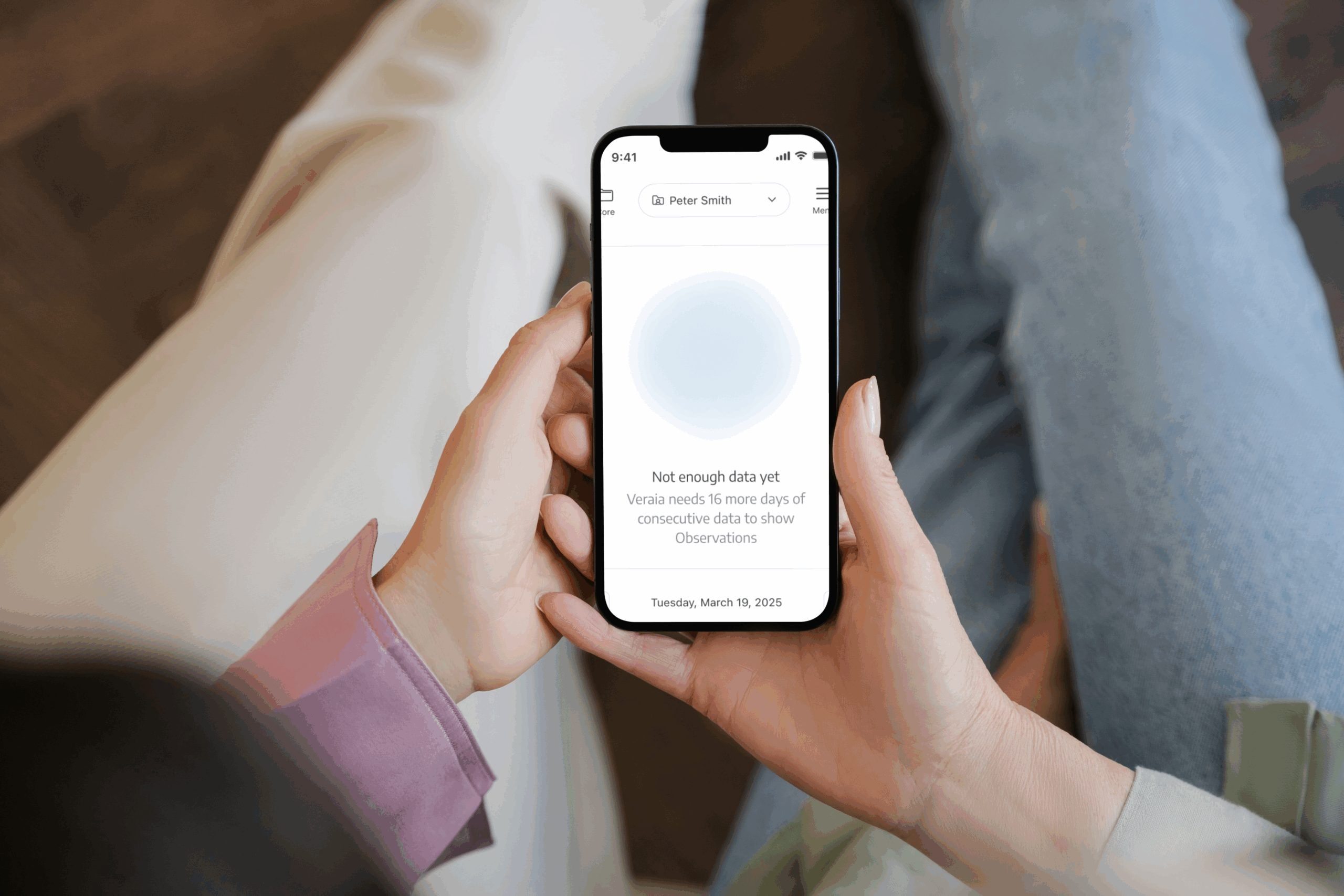
- Keep track of all medications in one place – what is the person currently taking, dosage and frequency. Veraia allows you to do that under the Medication tab and provides a summary of all intakes. It also cross checks against allergies and conflicting ingredients every time you add a new medication
- A one pager health summary – this is what Veraia provides to you once you build a Core – for the person in your care. You will get an overview of everything important at a glance.
- Appointment preparation – Veraia surfaces all the important information you need to mention to the doctor you are seeing. Many times in the chaos of a situation and the shortness of an appointment we can forget details. Veraia remembers them for you and flags them.
- Delegate 1 task this week – this is not something an app can help you with but delegate a task this week that does not need to be yours. Yes, I appreciate some of these tasks may cost money. If you are on a budget try to be a part of a support group that can maybe help through volunteers. But even simple things like getting a meal prepared for you instead of you having to do it can be a welcome moment of rest
011h for yourself
You may tell yourself you do not need it and you can keep going. It is so important to acknowledge your load and take a conscious break. What do I mean by conscious - dedicated time, allocated for yourself, doing something that gives you pleasure. It can be the simplest of things like just sitting in silence, or listening to something positive, watching something funny etc... Do not underestimate the power those moments have on your overall health.
02Ask someone to help out
People won't understand what you are going through, most of the time. That is OK. However you will be surprised how many people are willing to help if you ask. A lot of people feel awkward talking about illness, not hurting your feelings with questions and just generally not knowing what to say. However if you ask them, they will be there. To drive you somewhere, to run an errand, to just be on the other side of the phone.

03Use services available to you
It took so long to get my mother out of the mentality that she has to do everything herself, when possible and affordable just get professional help. Or make it easier for yourself with chores. Ask someone to help you with cleaning if you can, even if once a month, it makes a huge difference having to just maintain your home versus deep cleaning it yourself. Also, check what services can benefit you from your bank, insurance etc - there are services we rarely remember to use if we do not check. For example, we had to change the tyres of the car and turned out the lease agreement allows for free pick up/drop off of the car. One chore - done. However you have to check all your benefits in the small print 😉

04See friends
Your friends are a lifeline. Yes, many of them may fade into the distance when the going gets tough but the real ones will be there, and they would love to hear from you. You are not too much for asking them to pop by or maybe come to your area for a quick coffee/lunch. Do not isolate yourself, it is very easy to do when you become a carer. The real people around you are not going to get scared from the tough times. You can also become part of carer support groups. Those can be truly valuable when you need to share with someone who understands what you are going through.

05It is ok to feel
Not that you need my permission to do so but allow yourself to feel. Cry if you need to. Grieve. Your feelings are valid. I remember sitting by my grandmas bed and reading to her, she did not know me any more. I am not even sure she liked the reading. I just wanted to connect, get a glimpse of her again - the woman who loved me so dearly. What I truly wanted to do was just cry, be angry be able to express the pain. So I put the book down and I talked. I talked about the sadness, the helplessness, the fear, the grief and how much I loved her. I do not know how much of it was in my head, how much of it was out loud. But I knew it was important that I acknowledged my feelings and maybe on some level she also knew how loved she was until the end.

Carer support in the UK and Bulgaria
Being a carer is a second full time job, if you already have one 9-5. You can feel invisible to a lot of people, and it can be a lonely journey.
Especially in a country like Bulgaria, where the carer networks are really thin and under resourced, it can fee particularly overwhelming. I hope that this is where Veraia can help the most. It will aim to replace some of the lack of support and information available in the country with its digital capability to reduce mental overload and potential lack of knowledge in what and how to track changes effectively. As I watched my mother care for my grandma and then my father, I realised how she all of a sudden got a second job nobody prepared her for, nobody helped her with and nobody supported her with. So for all the mothers, fathers, children or grand children out there going through this journey – we truly hope to make your lives easier with Veraia.
If you are in the UK, it is still a very challenging scene but at least there are some organisations that can also provided in person/virtual support. I can still see a benefit of Veraia to support ongoing care management of information but the personal support is also there through some of these organisations:
