Your health story.
Always with you.
Nobody warned you it would be this hard. Veraia was built for the in-between — the ongoing, everyday reality of managing health over time.
Join the WaitlistYou know your health story better than anyone. You've lived it. You just can't access it on demand, in the right order, at the right moment.
That's not a personal failing. That's a design flaw in a system that was never built to remember you.
You leave appointments feeling like you forgot to mention the most important thing. You piece together timelines from memory, from WhatsApp threads, from a folder on your laptop you haven't opened in eight months.
You show up to A&E and you're asked for a medication list you don't have with you. You manage three people's health histories in your head — your mother's, your child's, your own — and somehow, none of it is written down anywhere.
The system expects you to hold all of this. It just never gave you anywhere to put it.
Without a system
You leave appointments feeling like you forgot to mention the most important thing — and you probably did.
You piece together timelines from memory, from WhatsApp threads, from a folder somewhere you haven't opened in months.
You show up to an emergency room and you're asked for a medication list you don't have — at the exact moment you need it most.
In plain language
Veraia is a personal AI health assistant. Not a diagnostic tool. Not a replacement for your doctor. Not another wellness app that tracks your steps and calls it healthcare.
It's the thing that holds your health story so you don't have to hold it all in your head.
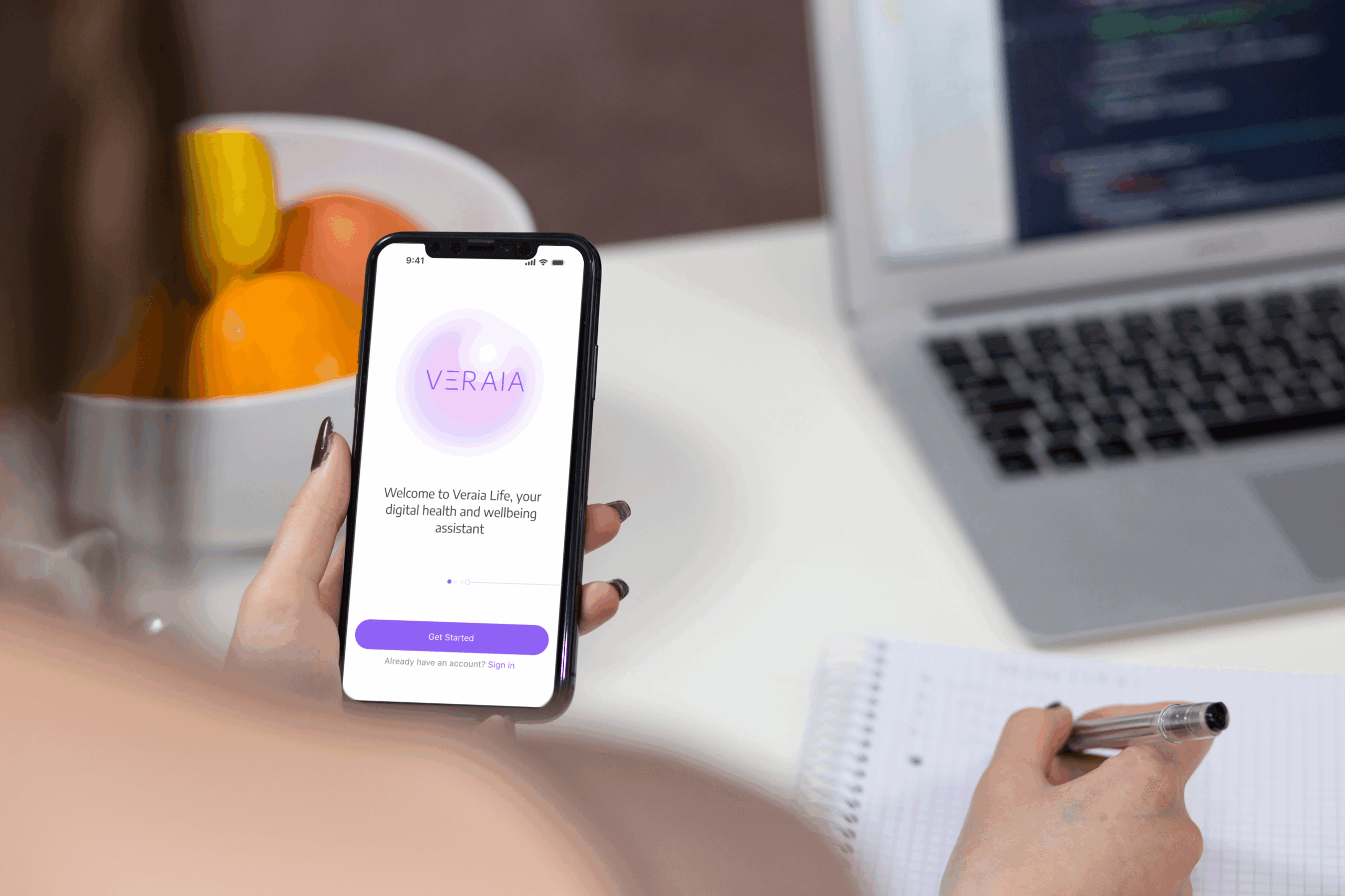
You upload what you have — results, prescriptions, appointment notes, hospital letters, vaccine records — and Veraia organises it into a clear visual timeline that actually makes sense. Your history, in one place, yours to access whenever you need it.
And when things get urgent? It's ready before you are.
Join the WaitlistEvery feature, explained
A plain-language breakdown of every feature in the app — what it does, how it works, and who it is for. Tap any card to expand the detail.
Important: Veraia is a digital health organisation and information tool. It is not a medical device, diagnostic tool, or clinical decision support system. It does not diagnose conditions or replace the advice of a qualified healthcare professional. In any emergency, always contact your local emergency services.
Create profiles for yourself, your family, or someone in your care
Set up individual health profiles for multiple people within a single Veraia account — yourself, a child, an elderly parent, or anyone you are caring for at home.
How it works
Each profile is a separate, self-contained health record. You can switch between profiles at any time. Profiles are kept private and are not shared unless you explicitly choose to.
Who this is for
- Individuals managing their own health information
- Parents tracking records for children
- At-home carers managing data for an elderly or bed-ridden family member
- Anyone responsible for another person's medical appointments or prescriptions
Log allergies, pre-existing conditions, and baseline health data
Record known allergies, diagnosed conditions, and baseline health information that should be visible across the entire profile — always available when it matters.
What you can log
- Allergies — food, medication, environmental, or contact
- Pre-existing and chronic conditions — diabetes, hypertension, asthma, and others
- Relevant surgical or medical history
Why this matters
This forms the foundation of your profile. Referenced automatically when the app checks new prescriptions, and available at a glance in Emergency Mode.
Daily symptom and wellness log
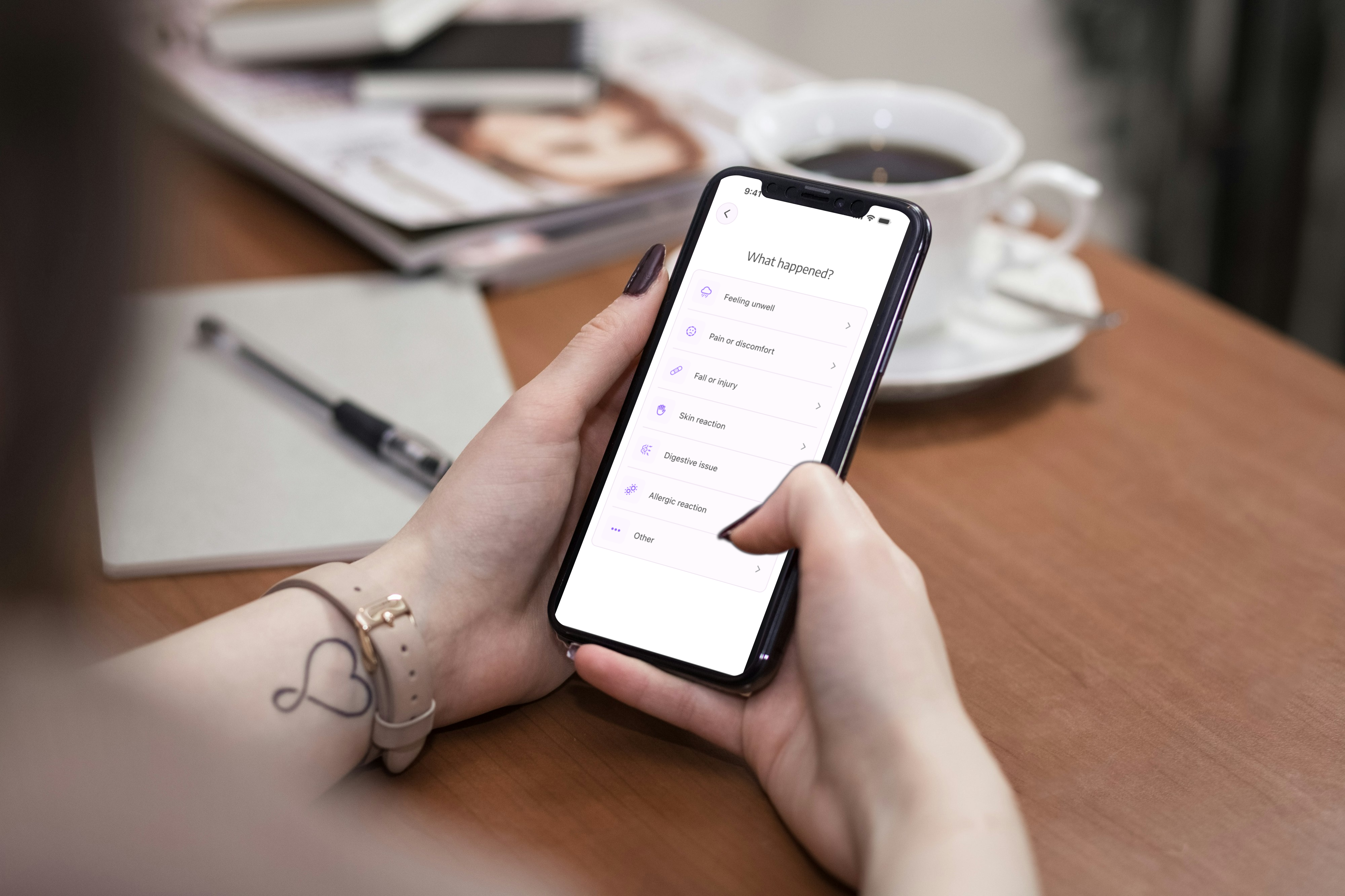
Record how you or the person in your care feels each day — symptoms, mood, and notable changes — building a timestamped health diary over time.
What you can log daily
- Symptoms — type, severity, location, and duration
- Days of feeling unwell, including start and end dates
- General mood and energy levels
- Blood pressure, blood sugar (glucose), and body temperature
Veraia does not interpret daily log entries as diagnostic data. The log is an organisational tool to help you communicate your health history accurately.
Period and menstrual cycle tracking
Log menstrual cycle dates, duration, and associated symptoms alongside the rest of your health data — keeping everything in one place.
What you can track
- Cycle start and end dates, flow intensity
- Associated symptoms — cramps, headaches, mood changes, fatigue
- Cycle irregularities over time
Cycle data sits alongside symptoms, medications, and conditions — so any cross-area patterns can be surfaced by the AI observation layer when you prompt it.
At-home carer daily log — for bed-ridden patients
A dedicated daily logging mode for carers managing a bed-ridden patient at home, covering blood pressure, blood sugar, fever, and general condition.
What carers can log daily
- Blood pressure — systolic and diastolic with timestamps
- Blood glucose levels and body temperature
- General mood and responsiveness observations
- Notable changes in condition, behaviour, or comfort
This feature does not replace the clinical assessment of a registered nurse or doctor. It is a record-keeping tool to support carers.
Scan or manually enter health documents
Photograph prescriptions, GP letters, test results, hospital letters, and vaccine records — or enter manually. All stored by type and date in your profile.
Document types you can add
- Prescriptions, medication lists, and GP letters
- Blood test, lab results, and imaging reports
- Hospital discharge summaries
- Vaccination and immunisation records
- Specialist consultation notes
Camera scan: photograph the document directly in the app. Manual entry: type or paste key information if you don't have a physical document.
Wound and skin condition photo log — for home carers
Photograph wounds, pressure sores, rashes, or skin changes directly in the app — creating a dated visual record to share with district nurses or GPs.
Each photo is automatically timestamped and stored under wound and skin monitoring. Add a note to each image — location on the body, observed changes, any treatment applied.
- Track pressure sores and bed wounds over days and weeks
- Document rashes, skin reactions, or unexplained changes
- Share the visual log with a district nurse or GP at the next visit
- Provide remote visibility during telephone or video consultations
Veraia does not analyse or interpret wound photographs. Clinical assessment must always be carried out by a qualified healthcare professional.
Prescription cross-check — known interaction screening
Each time you scan a new prescription, Veraia cross-checks it against your logged allergies, existing conditions, and current medications to flag any known interactions.
What is checked
- Allergies — whether the new medication contains a substance you have a recorded allergy to
- Current medications — known drug-to-drug interactions
- Pre-existing conditions — contraindications for conditions you have logged
Any potential interaction is surfaced as an observation so you can raise it with your prescribing doctor or pharmacist before starting the medication.
Not a substitute for pharmacist review. Always consult your GP or pharmacist before making any changes to your medications.
Emergency Mode — instant access to critical health information
One tap displays a clear summary of critical health information — medications, allergies, conditions, emergency contacts — ready to show a paramedic or A&E nurse immediately.
What Emergency Mode displays
- Current medications and dosages
- Known allergies including medication allergies
- Diagnosed conditions and relevant medical history
- Emergency contacts and critical notes
Single tap to activate. Designed to be handed to a healthcare professional — clearly laid out, no navigation required. Works for your own profile or any profile you manage as a carer.
AI health observations — pattern detection over time
As your health data builds up, the AI layer can identify patterns across your entries and surface these as plain-language observations when you ask it to review your data.
Examples of observations
- "Your blood pressure readings have trended higher over the past three weeks."
- "You have logged headaches on 8 of the last 14 days."
- "Your haemoglobin results across your last three blood tests have been below the standard reference range."
Every AI output is an observation, not a conclusion. The app will never tell you what a pattern means or what to do about it. Observations are designed to help you notice things worth mentioning to your doctor.
Powered by Claude by Anthropic. All AI analysis is performed on anonymised data. The AI does not diagnose conditions.
Health summary view — your full picture in one place
A consolidated view of all data in a profile, or a focused view for a specific category, with AI observations displayed alongside the relevant data.
Full profile summary: an overview of everything logged — conditions, medications, symptoms, documents, daily logs — in a single structured view. Useful to review before an appointment or share with a new provider.
Section-specific view: focus on a single data type — all blood pressure readings over 90 days, or all scanned documents — with AI observations for that category shown alongside.
Because this matters
more than anything
We chose Claude by Anthropic as our AI layer. Not because it was the most obvious choice, but because their ethics framework and data policies matched what we needed: an AI that handles health data the way health data deserves to be handled.
This is not a disclaimer buried in a terms and conditions document. This is the whole point.
EU-hosted infrastructure
Your data lives on AWS servers in Frankfurt and Ireland. It never leaves Europe.
Anonymised AI analysis
The AI analyses only anonymised data. We don't sell it, share it, or use it to train anything.
Your data, your control
Full details in our AI Ethics Policy, Privacy Policy, and Health Disclaimer — written in plain language.
No third-party sharing
We will never share your data with insurance companies, advertisers, or other third parties.
What Veraia will and won't do
What we won't be
- ✕Tell you what's wrong with you or make a diagnosis
- ✕Replace your GP, specialist, consultant, or pharmacist
- ✕Act as a substitute for medical care or emergency services
- ✕Sell, share, or train on your personal health data
What we will do
- ✓Make sure you walk into every appointment fully prepared, with your complete history
- ✓Help you arrive with the right questions and organised information
- ✓Keep your data in the EU, anonymised, and entirely yours
- ✓Be the knowledgeable, calm support the system forgot to give you
Why this exists
Veraia was built because someone sat in a hospital with a family member and realised that everything important — every medication, every dose, every allergy, every relevant piece of history — existed only in one person's head.
And that person was exhausted, and scared, and doing their absolute best in a system that wasn't designed to help them.
The healthcare system is full of brilliant people doing incredible work. It is also fragmented, stretched, and built around episodes — not stories. Every new doctor you see starts from zero. Every carer holds a mental load no one designed a tool for.
We built the infrastructure.
Join the WaitlistBefore and after —
as honestly as we can put it
You're the only one holding the whole picture
You're holding it together with memory and luck and a lot of stress. Every appointment is a scramble. Every emergency is harder than it should be. Every new doctor starts from scratch.
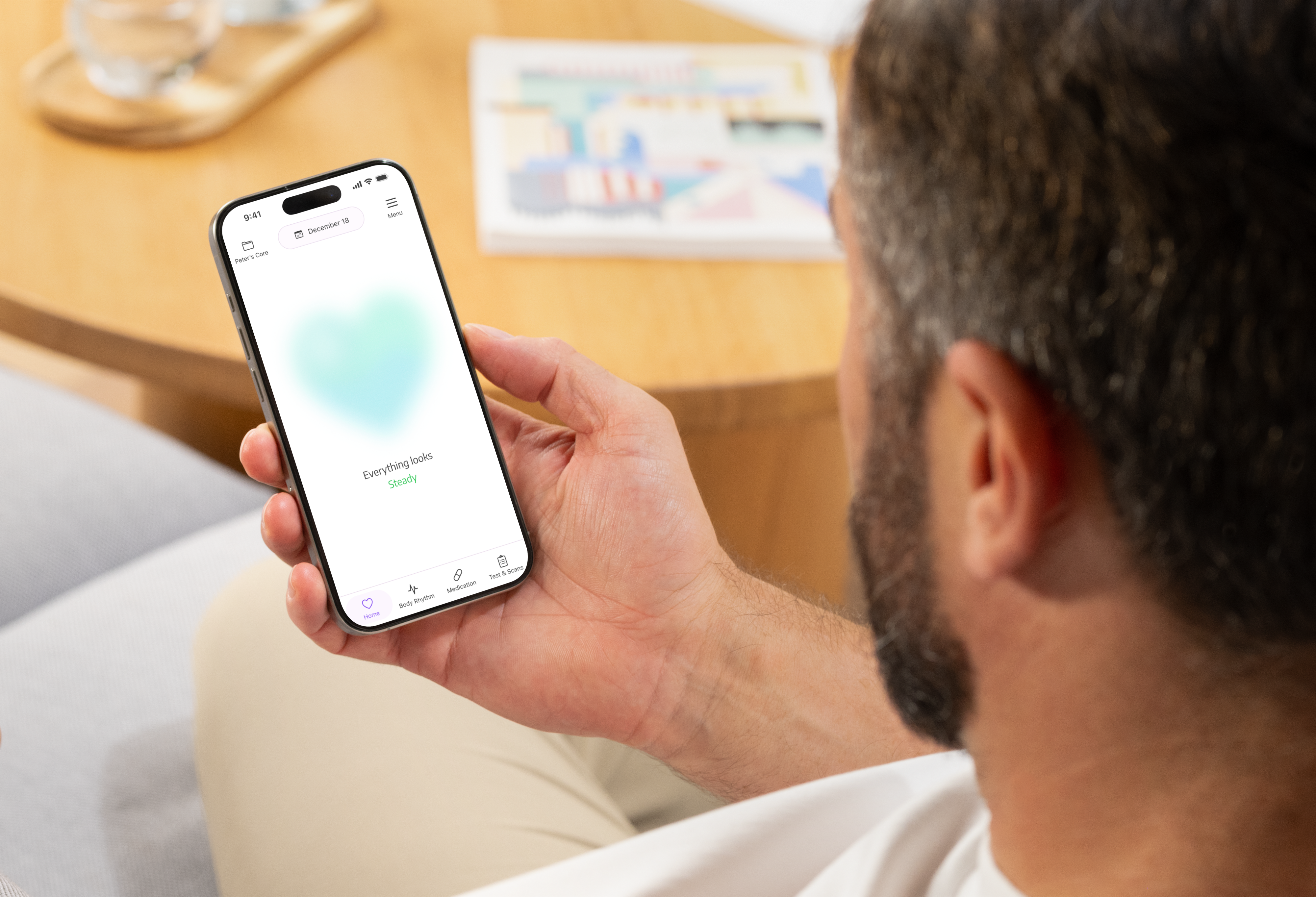
You walk in. You open the app. You're prepared.
You hand your doctor a clear, organised summary of everything they need to know. And for the first time, the conversation starts somewhere useful. That's it. That's what we're here for.
You are not disorganised.
You never had the right tool.
Veraia is the tool. Built for the people the system forgot to design for.
Join the Waitlist